85%
Nutrient removal *
85%
Nutrient removal *
No
Electricity
No
Chemicals
Low
Maintenance
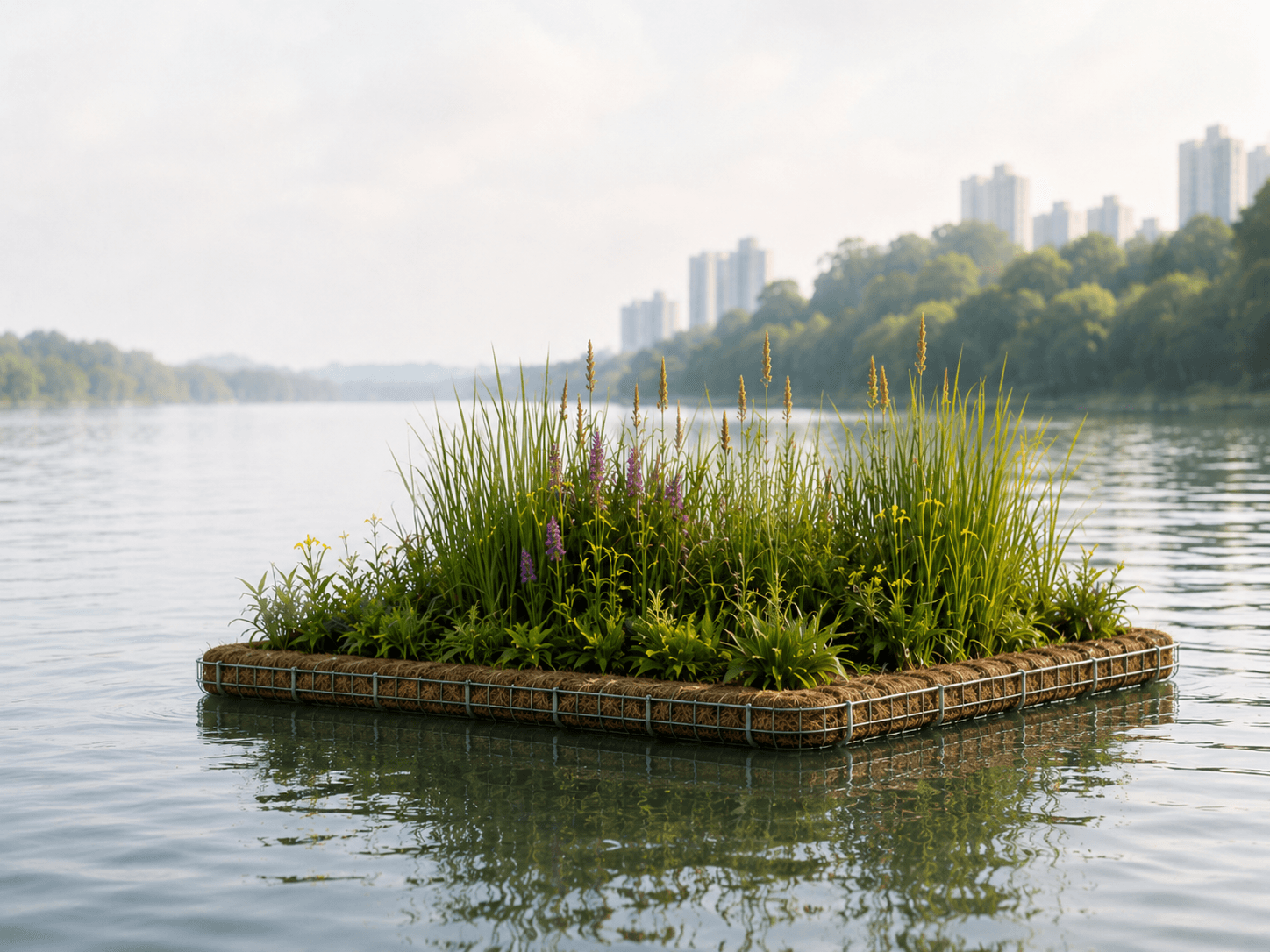
The system combines ecological treatment behavior with practical deployment mechanics for municipal and private projects.

Living vegetation on the water surface supports carbon capture, local ecology, and sustainable water management.

Safe habitat above and below the waterline supports fish, birds, frogs, insects, pollinators, and broader biodiversity.

Plain or hard-edged water areas become attractive green spaces with a natural landscape feature and environmental performance.
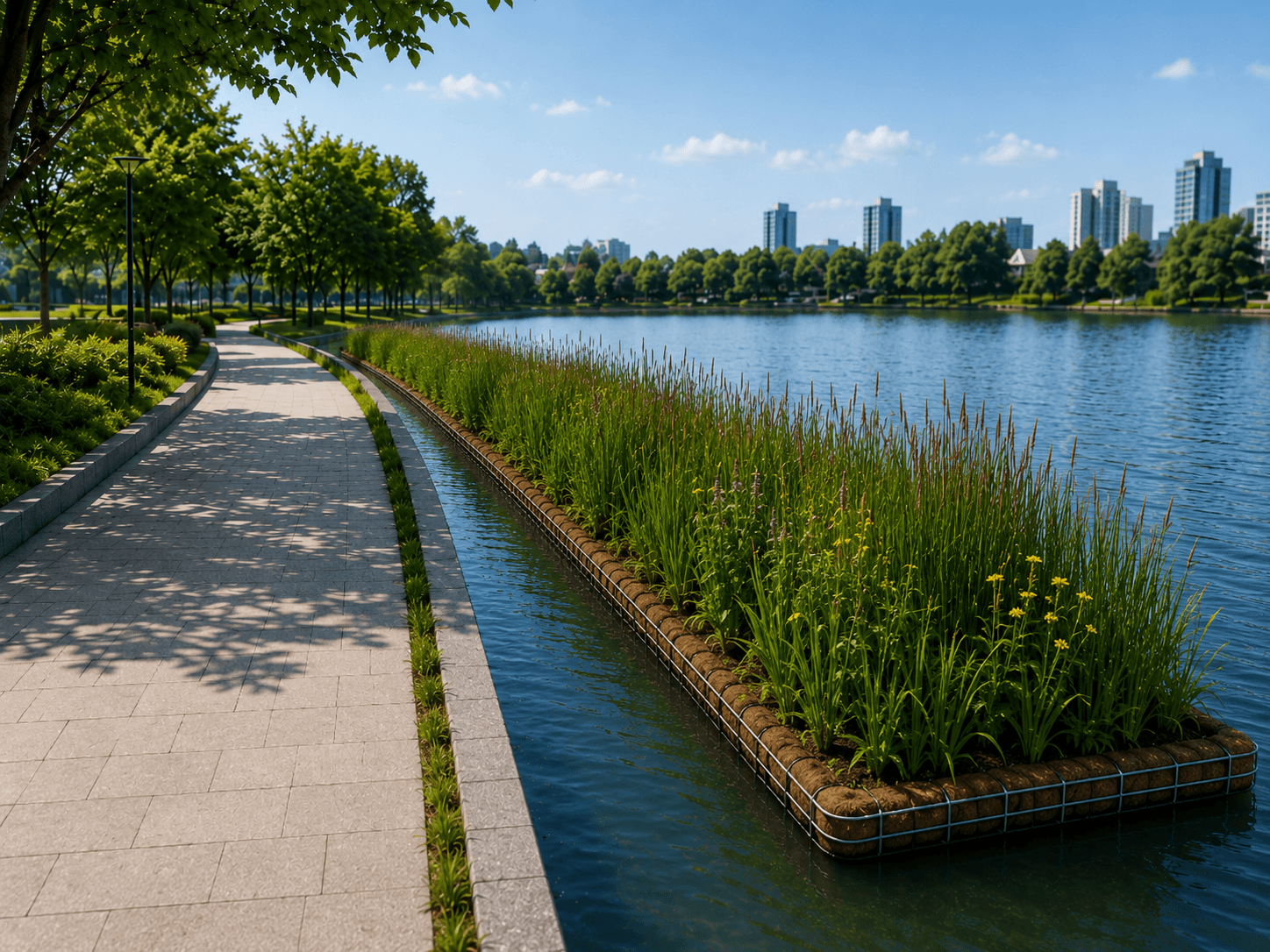
The wetland floats directly on the water surface, improving water quality without using valuable land in cities, parks, estates, and municipal sites.
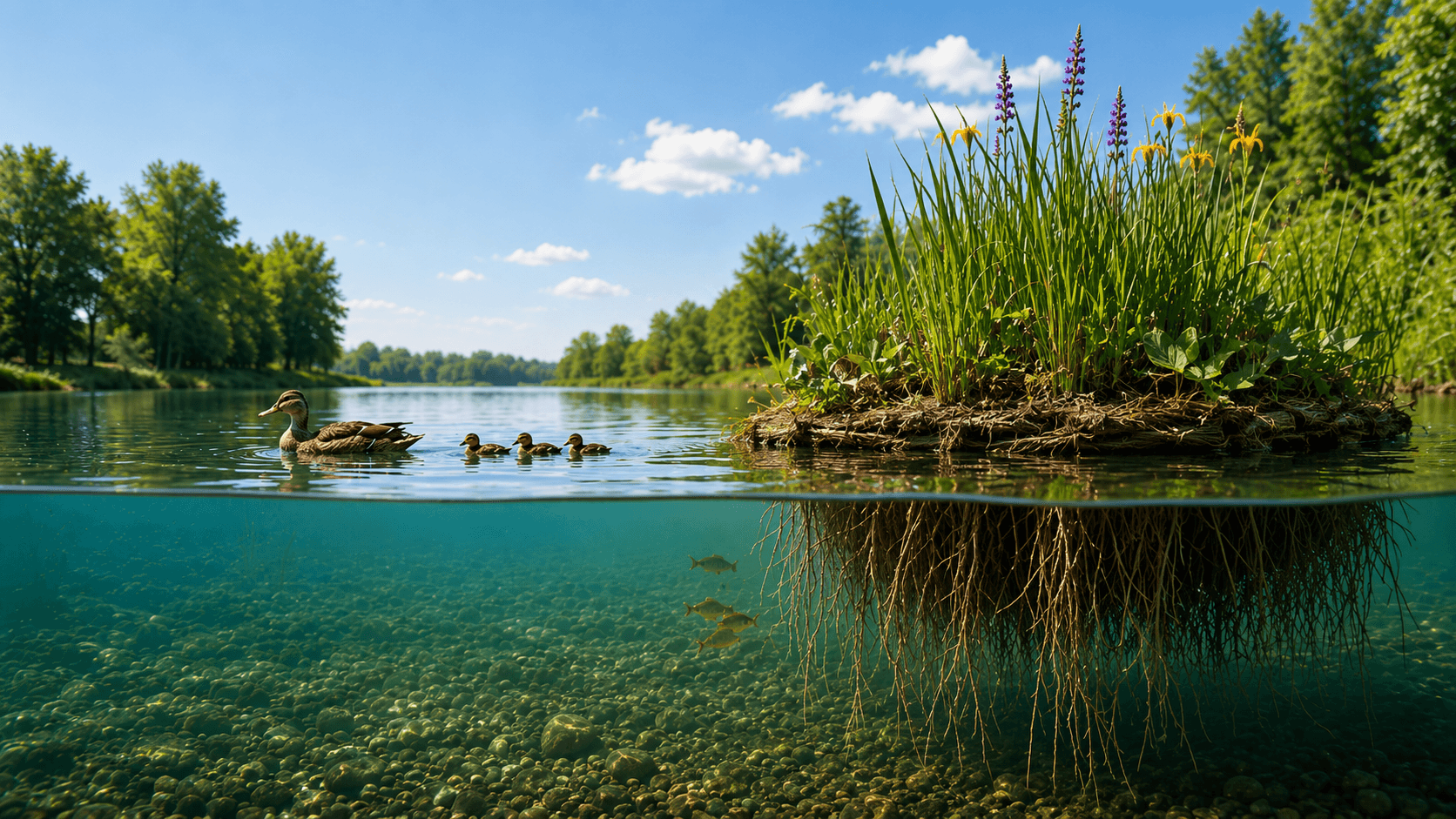
Living plants and submerged root zones help filter nutrients, sediments, and common water pollutants, supporting clearer water and reducing algae pressure.

The system mirrors how natural wetlands clean water and support life, bringing wetland ecology where shoreline or land-based wetlands are not possible.
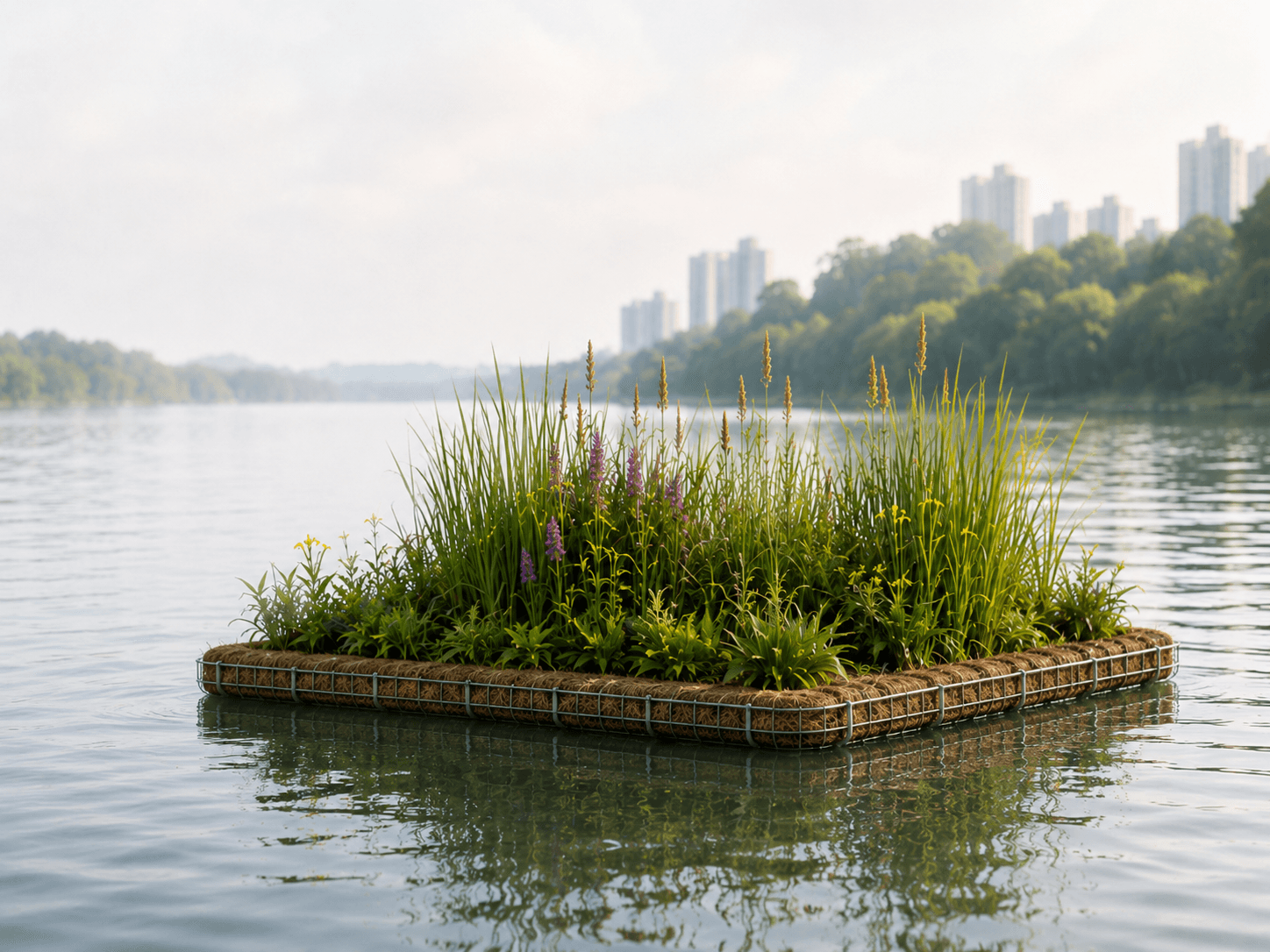
The system combines ecological treatment behavior with practical deployment mechanics for municipal and private projects.

Living vegetation on the water surface supports carbon capture, local ecology, and sustainable water management.

Safe habitat above and below the waterline supports fish, birds, frogs, insects, pollinators, and broader biodiversity.

Plain or hard-edged water areas become attractive green spaces with a natural landscape feature and environmental performance.
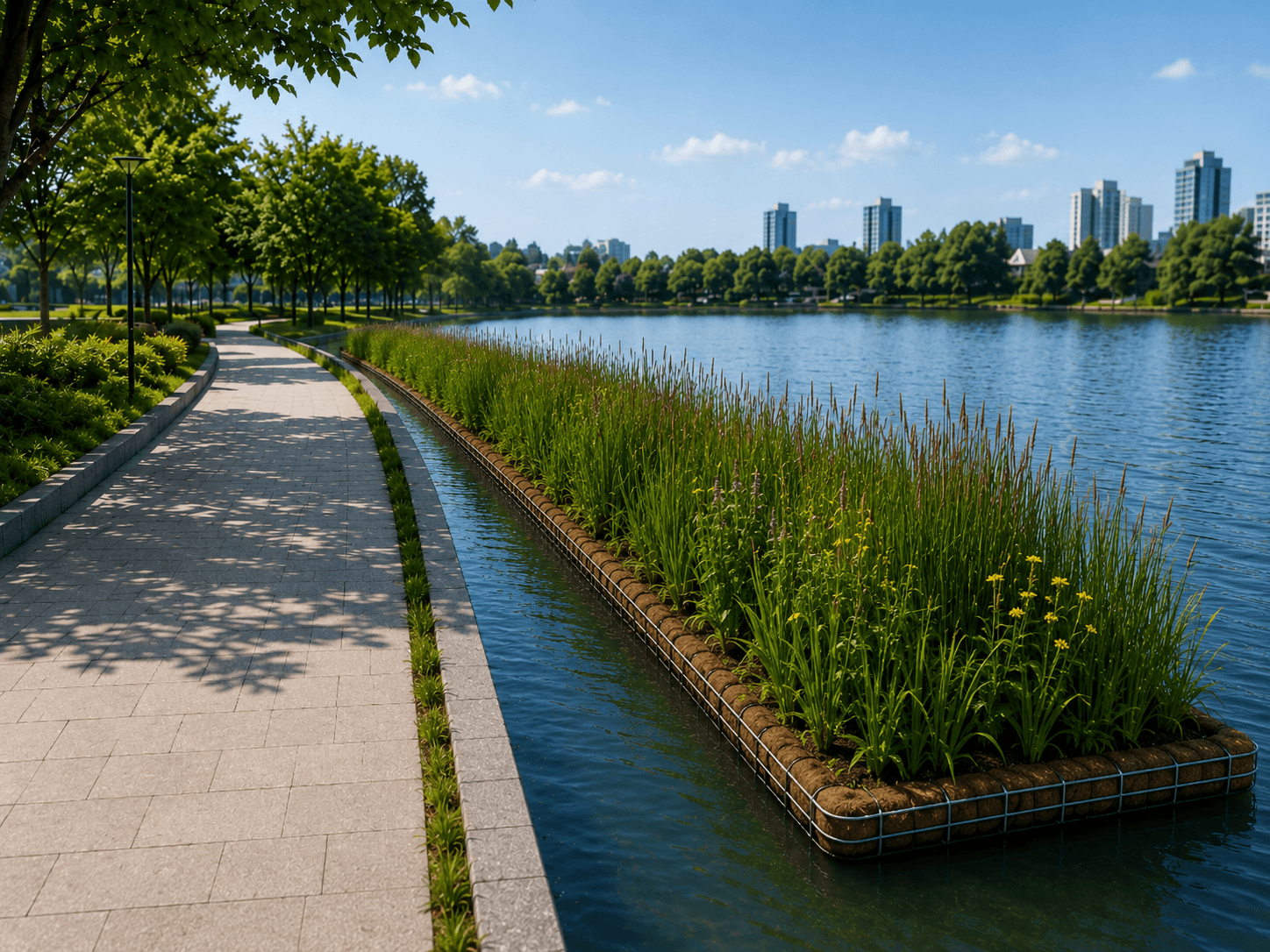
The wetland floats directly on the water surface, improving water quality without using valuable land in cities, parks, estates, and municipal sites.
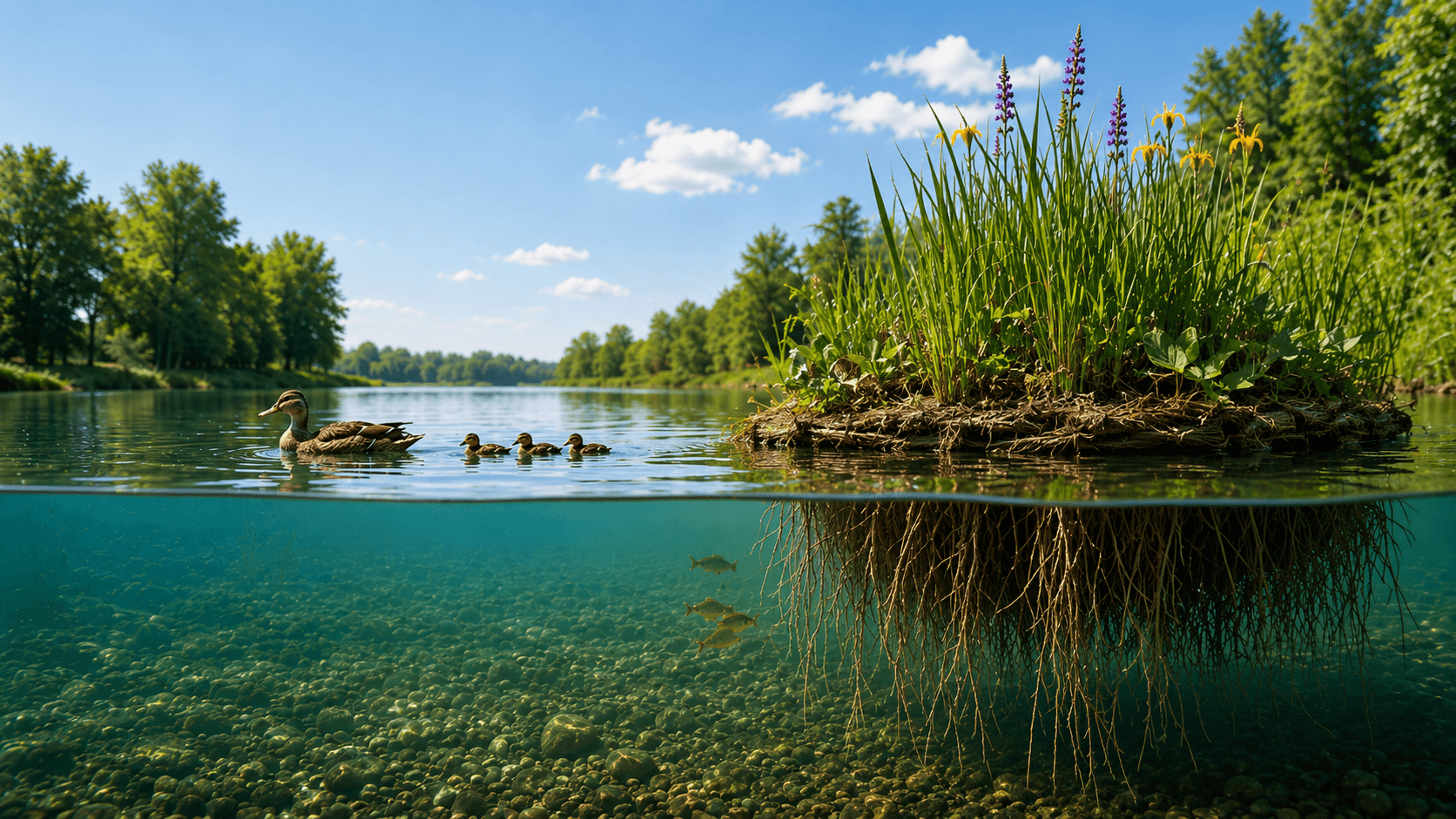
Living plants and submerged root zones help filter nutrients, sediments, and common water pollutants, supporting clearer water and reducing algae pressure.

The system mirrors how natural wetlands clean water and support life, bringing wetland ecology where shoreline or land-based wetlands are not possible.
Plant roots absorb excess nutrients, metals, and pollutants, then store and transform them into less harmful forms, helping clean the water naturally.
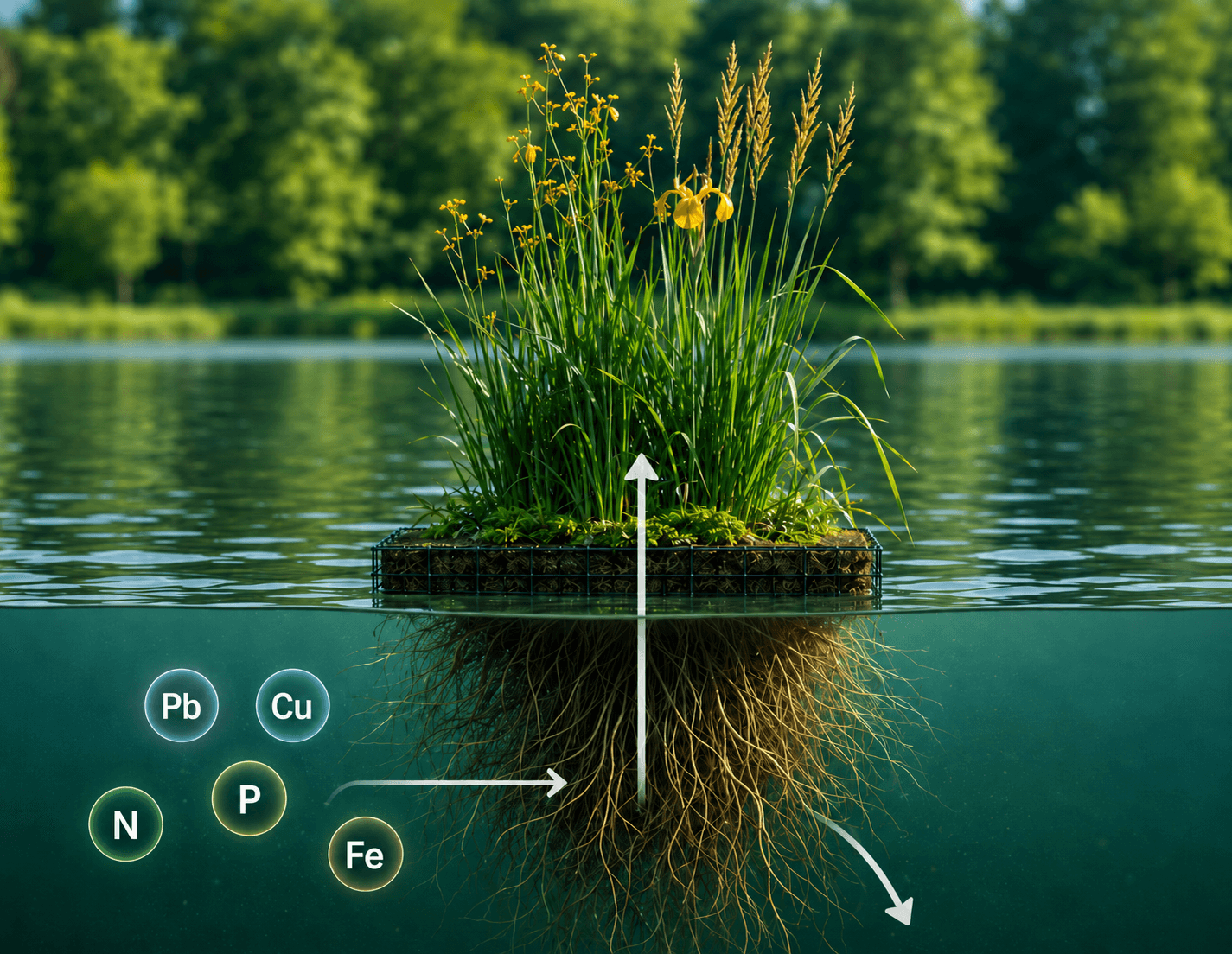
Plant roots and beneficial microbes break down contaminants while trapping suspended solids and settling pollutants, helping improve water clarity and quality.
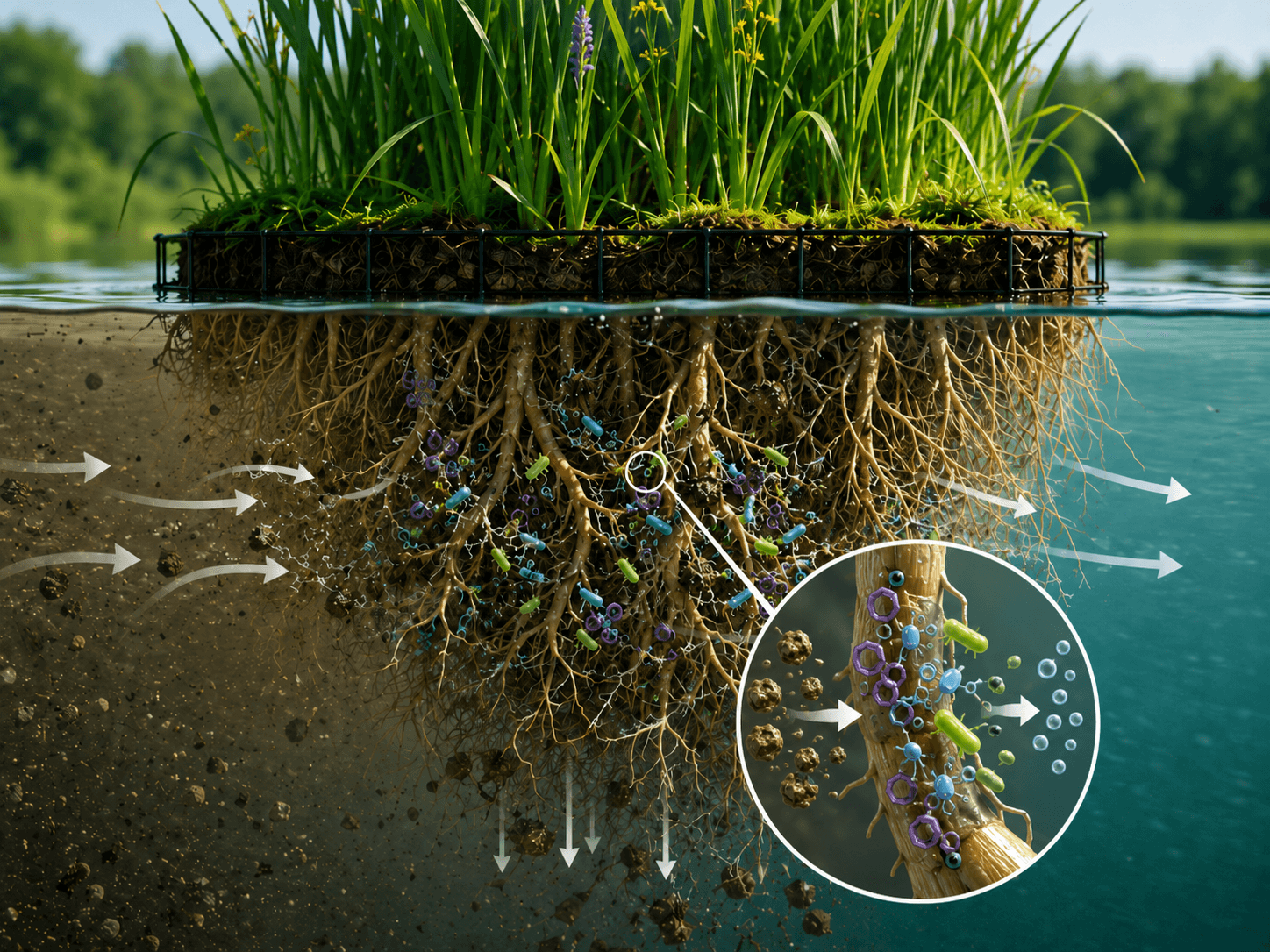
Plants develop a dense underwater root network beneath the platform, creating biofilm surfaces and habitat for fish, insects, and nesting birds while supporting long-term biodiversity restoration.
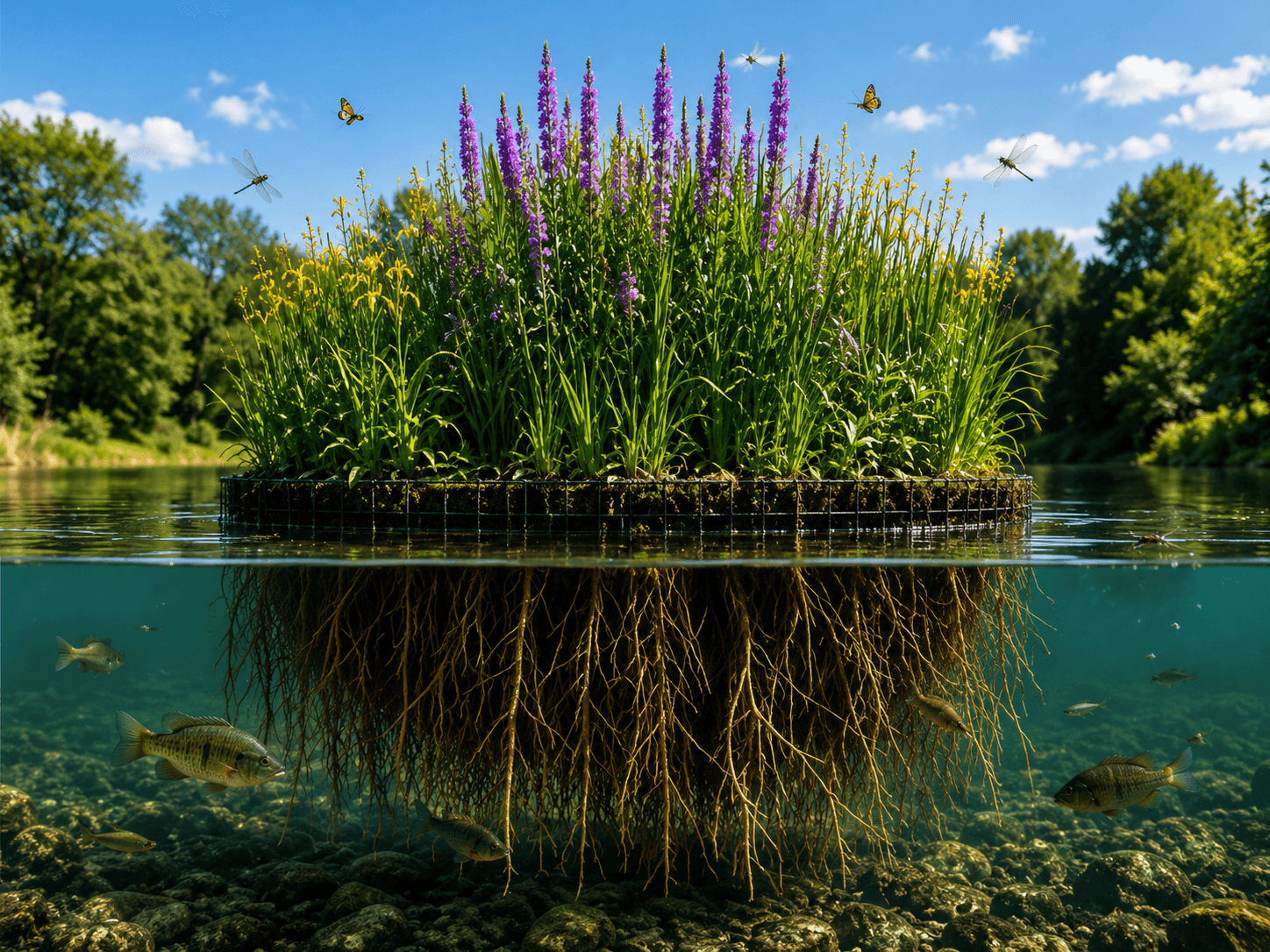
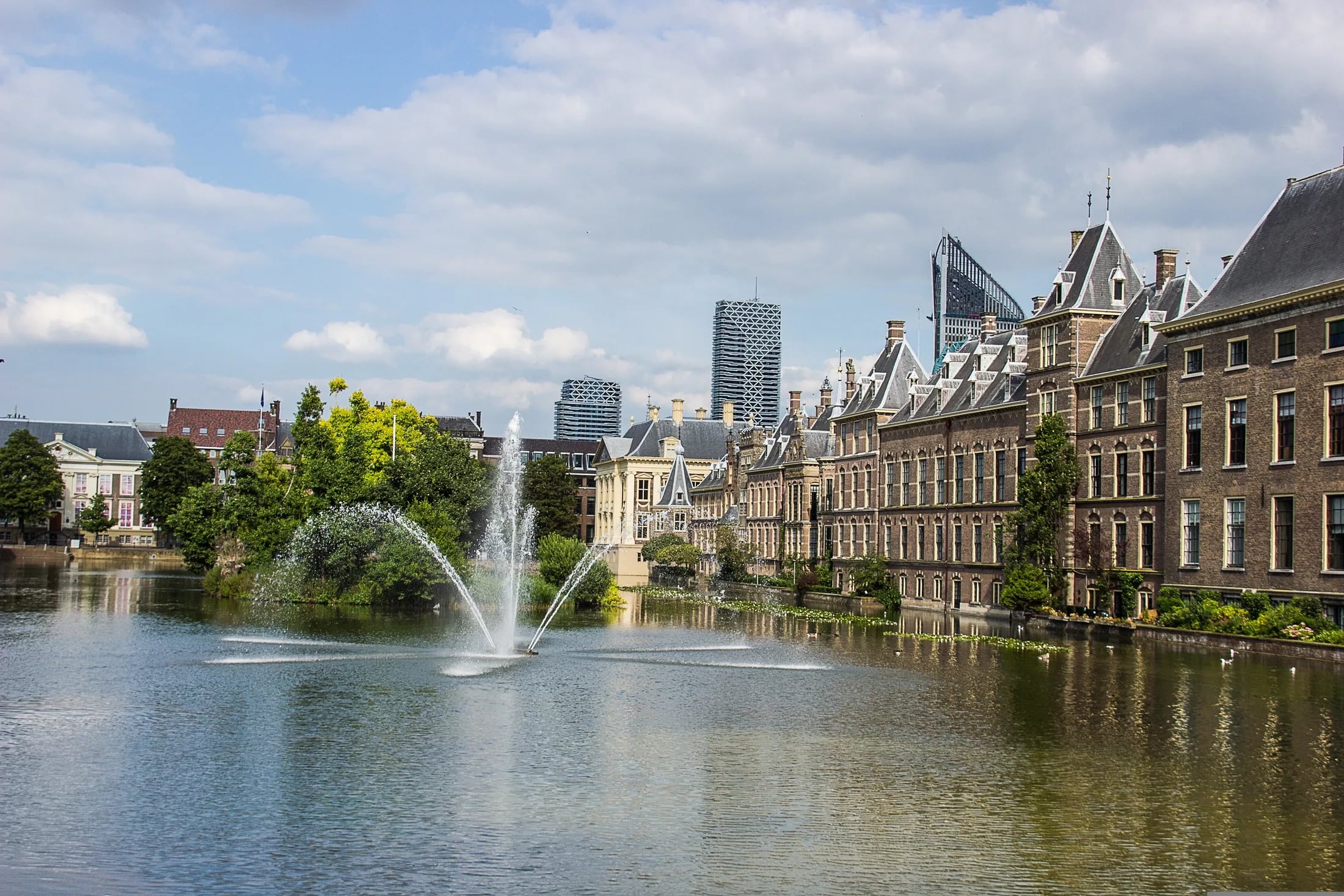
A nature-based floating wetland solution that cleans municipal water bodies, enhances biodiversity, and helps cities move toward greener infrastructure.
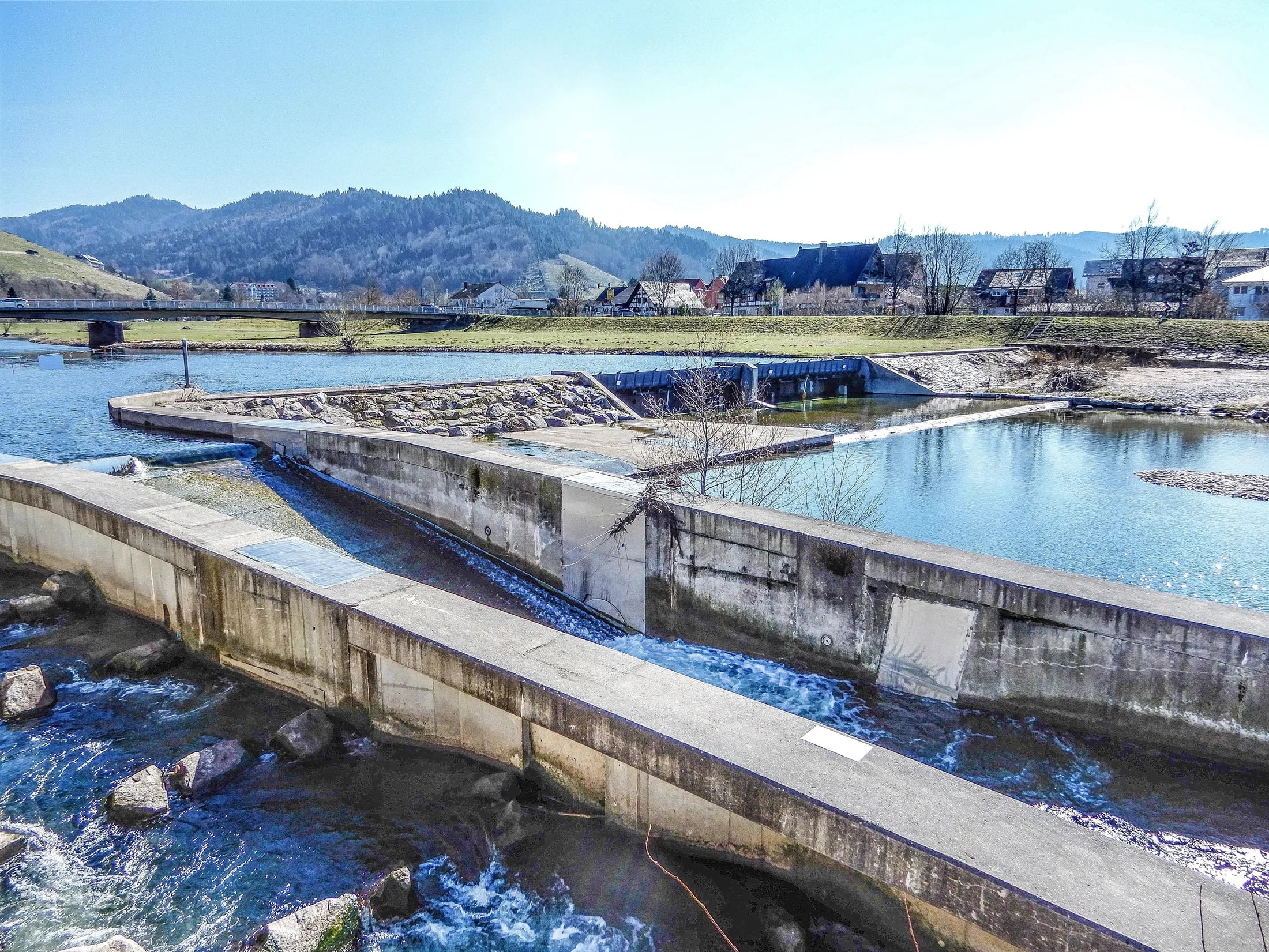
A passive floating wetland solution that helps industrial sites polish retention basins, reduce contaminants, and improve water quality without energy use.
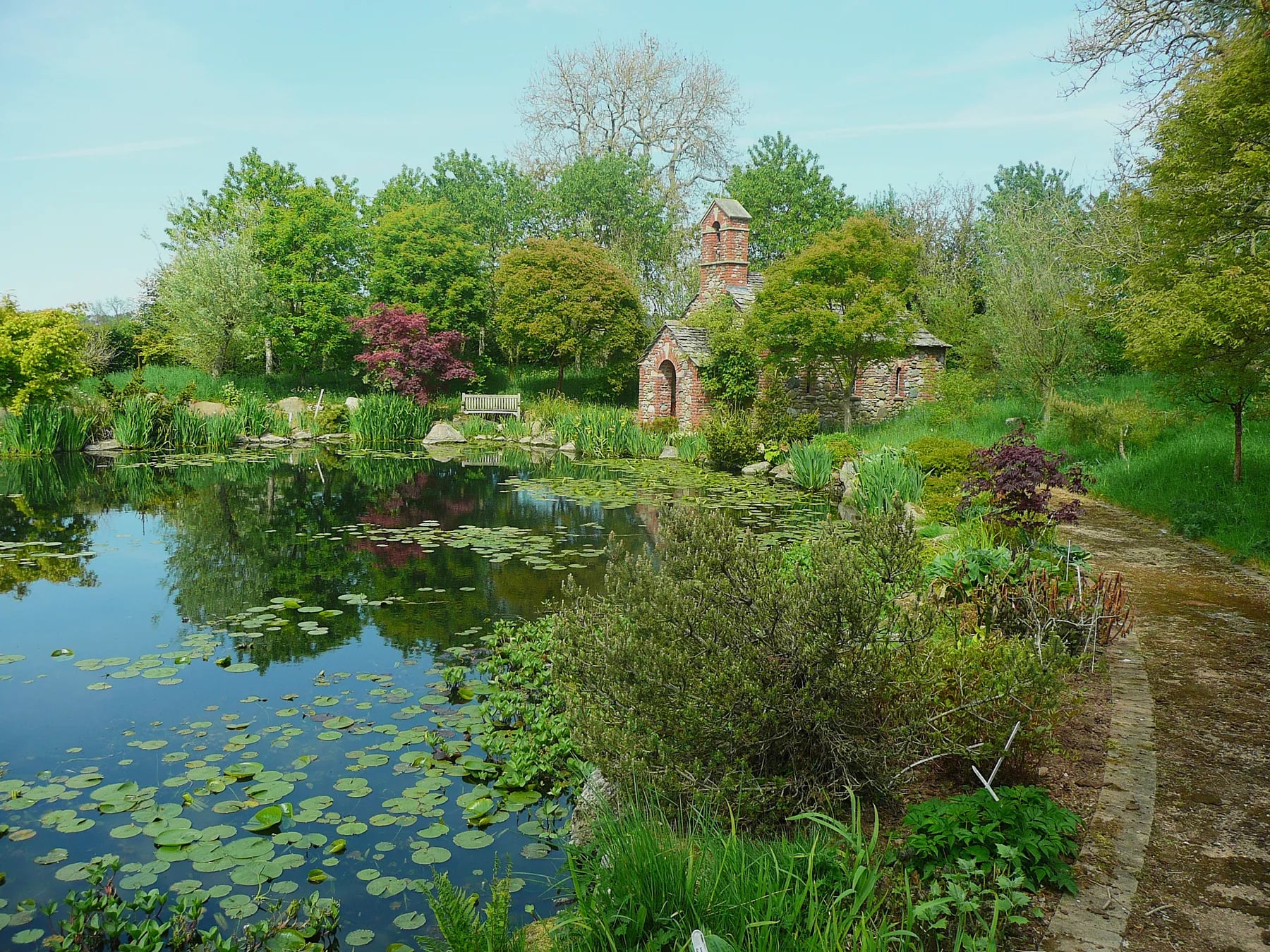
Enhance your waterbody with natural beauty while reducing eutrophication, algae blooms, and odors using an energy-free floating wetland system with no major construction.
A sustainable floating wetland improves water quality by creating a natural treatment zone directly on the water surface. Plant roots grow down into the water, where they absorb excess nutrients, trap suspended solids, and support beneficial microbes. These microbes help break down contaminants, organic matter, and pollutants while encouraging sedimentation. This natural process helps improve water clarity, reduce algae pressure, and support healthier aquatic ecosystems.
This eco-version is designed for sensitive ponds, lakes, wetlands, reservoirs, and ecological restoration areas. It uses sustainable materials and a low-impact floating design, allowing water treatment without major excavation, chemical dosing, or powered equipment. Because it works through plants, roots, and microbial activity, it is well suited for projects where protecting the surrounding ecosystem is a priority.
Floating wetlands help reduce common stormwater and surface-water pollutants, including excess nutrients, suspended solids, organic matter, fine particles, heavy metals, and other contaminants. The root system slows water movement, captures particles, and creates a biofilm-rich zone where microbes can break down pollutants. This makes floating wetlands a nature-based solution for improving water quality in ponds, lakes, canals, reservoirs, and stormwater basins.
The underwater root network creates a large surface area where beneficial microbes attach and form biofilm. This biofilm acts like a living treatment layer, helping digest organic matter, reduce nutrients such as nitrogen and phosphorus, and break down pollutants. At the same time, the dense roots filter suspended solids and help pollutants settle out of the water, improving clarity and long-term water health.
Yes. Floating wetlands can help reduce algae blooms by lowering the excess nutrients that often fuel algae growth, especially nitrogen and phosphorus. As plants and microbes absorb and process these nutrients, less food remains available for algae. Over time, this can support clearer water, better oxygen balance, and a more stable aquatic environment.
Yes. Floating wetlands can be retrofitted into existing ponds, lakes, reservoirs, canals, detention lagoons, and stormwater basins. Since they float on the water surface, they do not require additional land or major civil works. This makes them useful for upgrading existing water bodies, improving stormwater treatment, and adding ecological value without reducing usable land area.
Yes. Floating wetlands create habitat both above and below the water surface. The planted area can support insects and birds, while the underwater roots provide shelter and feeding zones for fish, aquatic insects, frogs, and other wildlife. By improving water quality and creating natural habitat structure, floating wetlands can support long-term biodiversity restoration and healthier ecosystems.
Share site size and water goals. We will recommend the right system and rollout plan.
Request Quote